Dionýz’s Atlas
- Location
- Beckov Rocks (Beckovské skalice), Beckov
- GPS
- 48.7738498 N, 17.8927499 E
- Opening
- 21. 11. 2026, 14:30
Access to the artwork
- Route typeHiking, cycling
- DifficultyEasy, suitable for families with children
- ParkingBy the first panel of the atlas
About the work
Artist: Šimon Chovan
Location: Beckov Rocks (Beckovské skalice), Beckov
Year: 2026
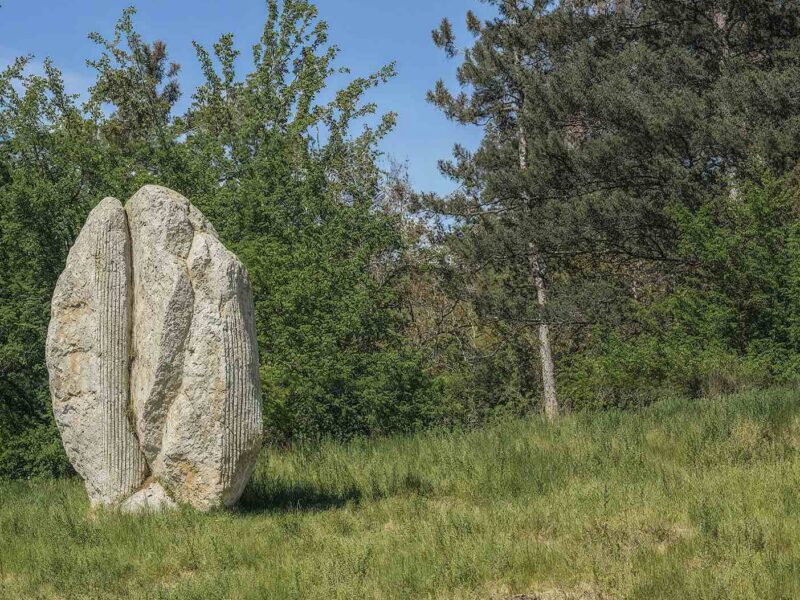
What can plants millions of years old tell us? And what might fossils of the plants growing in our landscape today look like?
The work Dionýz’s Atlas is inspired by the research of Dionýz Štúr, the renowned Slovak geologist, palaeontologist and botanist born in Beckov. Štúr devoted himself to the study of fossilised plants, which he documented in detail, drew and reconstructed. His scientific work became the starting point for an artwork that connects the geological past with questions about the future of our landscape.
The artist drew inspiration from the unique nature reserve of Beckov Rocks, known for its dry, warm environment and rare plants. As the climate changes, plant communities like these may become ever more widespread in the future.
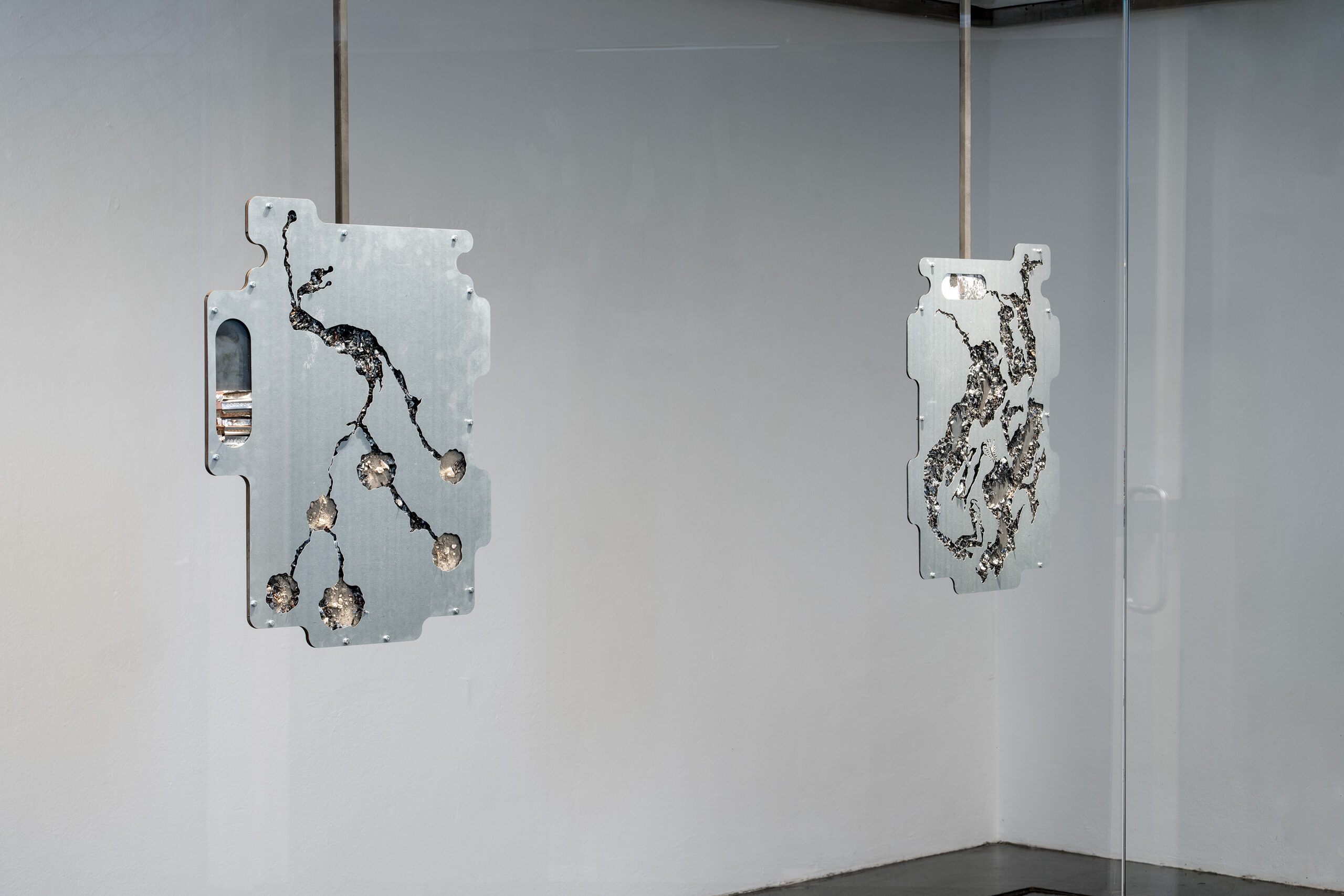
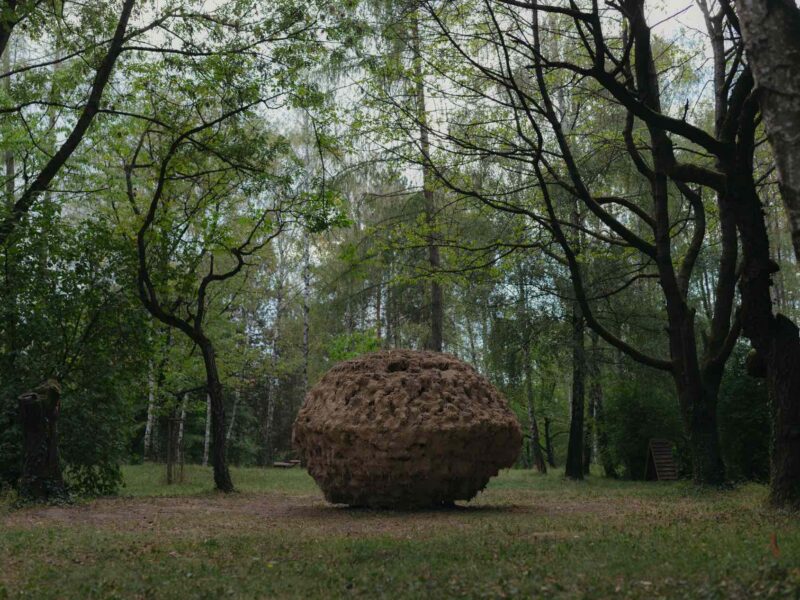
Šimon Chovan chose three plants typical of this habitat – spring pheasant’s eye, feather grass and hairy flax. He engraved their forms into limestone, creating imaginary fossils of the future.
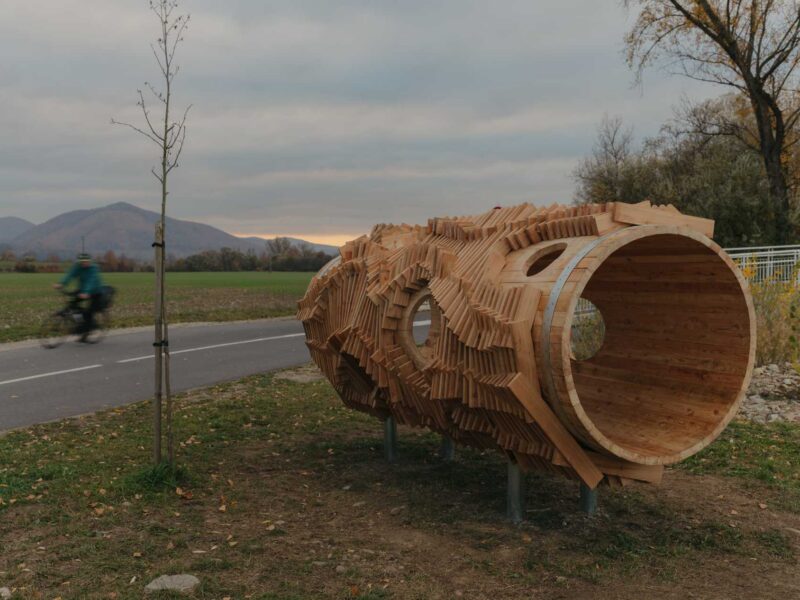
The stone objects are mounted on structures that resemble tourist information boards. Instead of the usual photographs or illustrations, however, the stories of the plants are told by the stone itself, its natural texture and the engraved images. The result is an unconventional atlas in which scientific knowledge of nature, artistic imagination and geological time meet.
Dionýz’s Atlas invites us to reflect on how the landscape changes under the influence of climate change and human activity. It reminds us that nature is constantly recording its story – and that our own present may one day become one of the layers of its geological memory.
Artist
Šimon Chovan
Of Dionýz Štúr’s broad field of work, I was drawn to his contribution to the phytopalaeontology of plants in the territories of Austria, Bohemia, Moravia and Slovakia. Štúr studied fossilised plants intensively, redrew them and reconstructed them on that basis. What interests me about plant fossils is that they compress vast stretches of geological time together with the short life cycle of plants. While researching the Beckov area, I was struck by the unique Beckov Rocks, a protected nature reserve in the Považský Inovec hills (near the village of Beckov). Geologically, it is a significant limestone and dolomite crag which, together with the neighbouring castle rock, creates a unique xerothermic environment. It is therefore an exceptional site of xerothermic vegetation – plant communities adapted to dry, warm conditions. Given the ongoing heatwaves and the climate crisis, we can expect similar plants to become more widespread in Slovakia in the future.
I chose three such plants – spring pheasant’s eye (Adonis vernalis), feather grass (Stipa eriocaulis Borbás) and hairy flax (Linum hirsutum) – which I wanted to engrave into pieces of limestone. If it were possible from a conservation and ethical point of view, stones from the former Beckov quarry could be used.
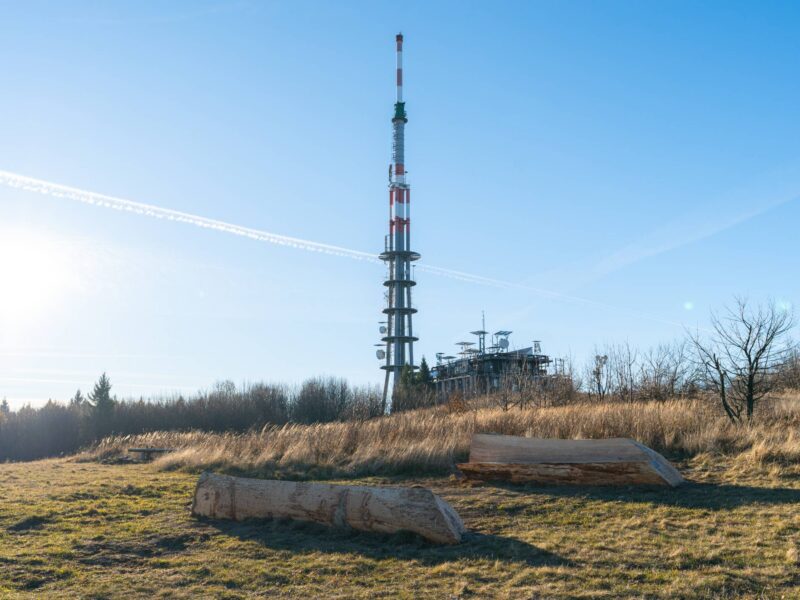
When thinking about how to anchor these speculative fossils in space, I concluded that I did not want to add anything invasive to a site that, between the bell tower and the tower, holds many historical and cultural layers – from the castle to present-day buildings. In the design I therefore work with the frames of tourist information boards, which are commonly found in such places. Unlike photographs and text, the carrier of information here is the limestone itself and its texture, often containing fossils, and on the other side the engraved scans of plants, much like in an atlas. In these works I create a tension between the rational grids of graphic layouts or biological classifications and a speculative drawn line that archaeologically reconstructs fragments of limestone into possible wholes. These abstract shapes contain subtle hints of figuration, referring to human activity as a new geological layer of the present. The boards would be made of anodised steel to withstand the weather, while the stones themselves will slowly and gently change. Each board will carry a short text about the plant, written in collaboration with an invited expert.
The placement in the landscape would be defined more precisely in collaboration with the architect Matúš Bišťan after a closer study of the spatial relationships and the size of the plot, and conversations with the commissioners and local residents.
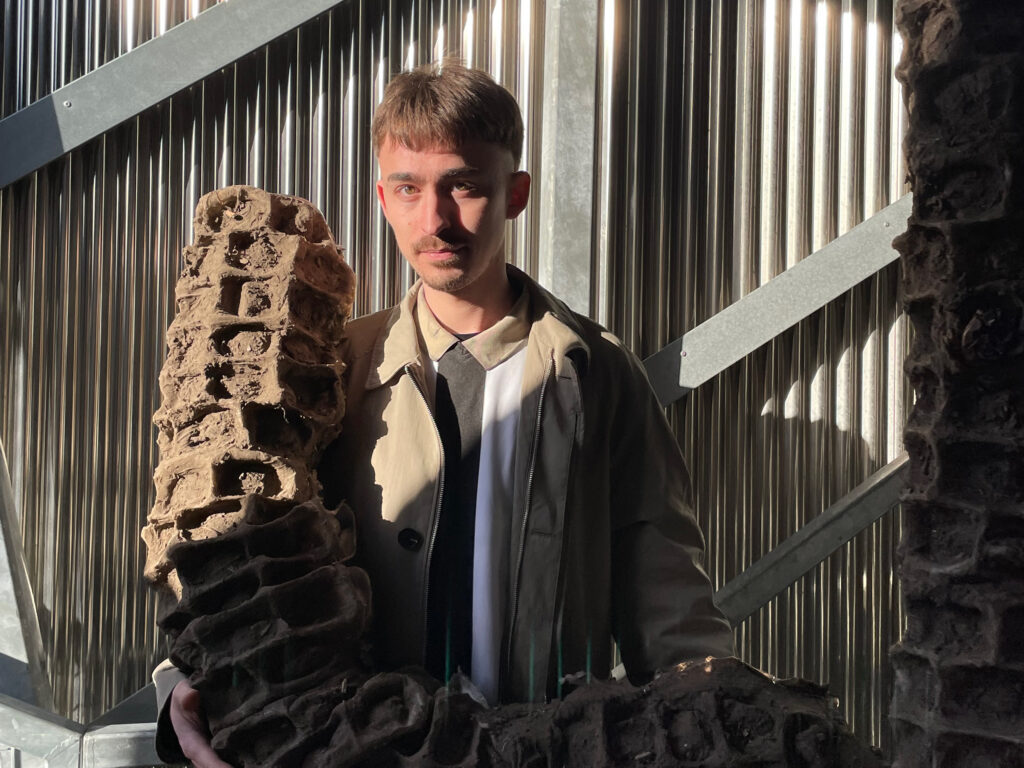
Šimon Chovan is a Slovak visual artist who lives and works between Dekýš, Vienna and Amsterdam. In his sculptures and spatial installations he connects nature, the human body and technology. He combines industrial materials with natural ones, such as ochre pigment from his native region of Banská Štiavnica. His objects resemble both living organisms and artificial structures, raising the question of where nature ends and the human-made world begins.
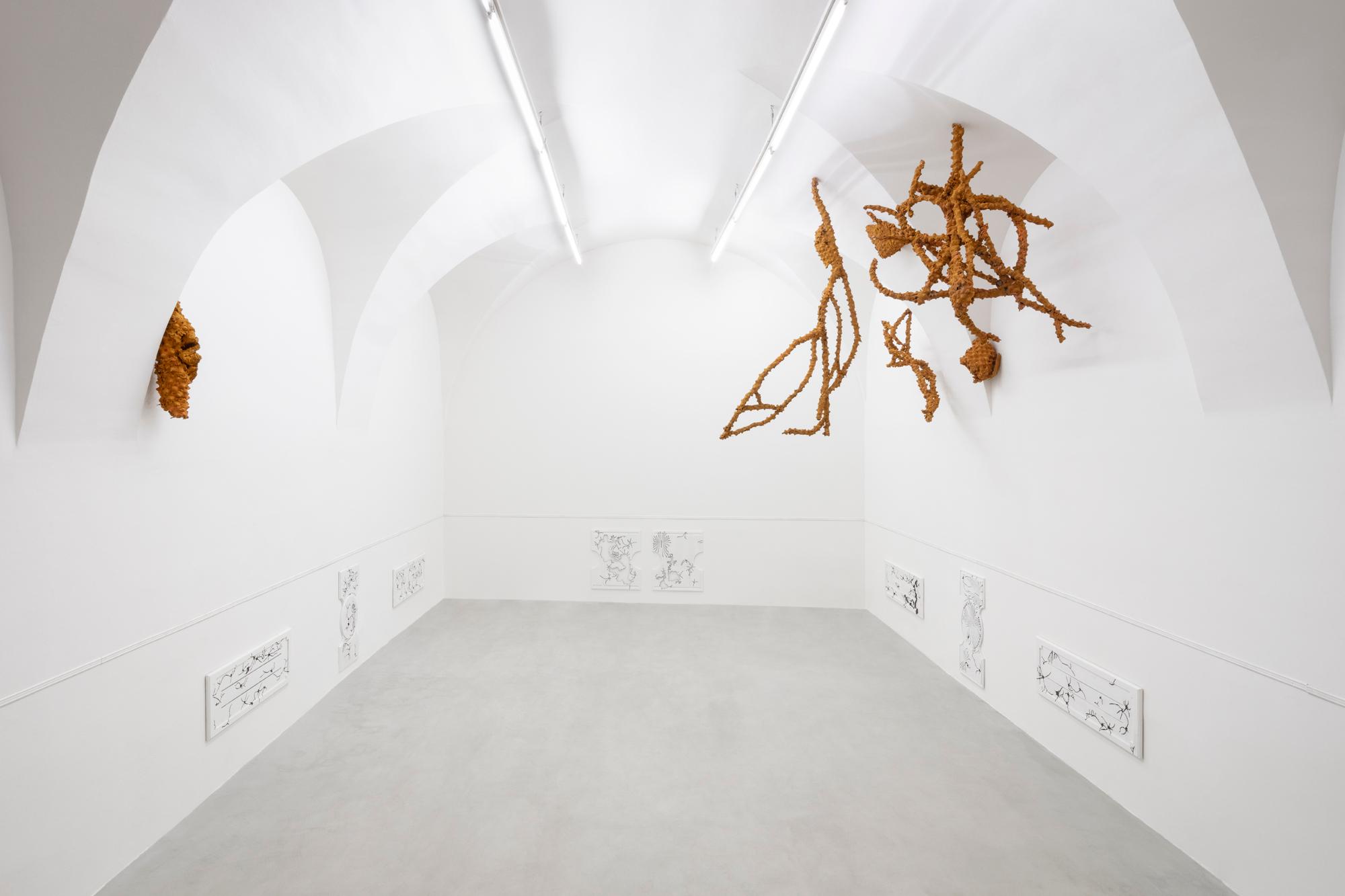
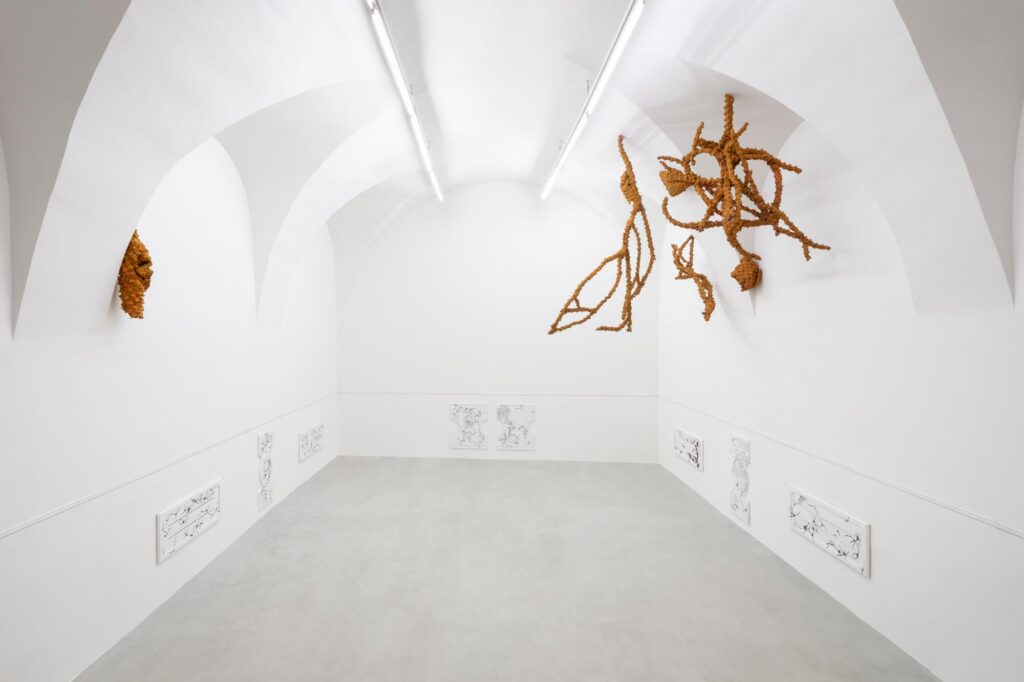
In the project Dendrites & Tissues (2024) he creates branching structures reminiscent of neural networks, the tunnels of bark beetles or technological components, linking seemingly different worlds through similar shapes and materials.
In the installation Leeching States (2025) he works with lithium-bearing minerals and the remains of recycled batteries, making visible the link between everyday technology and the extraction of raw materials and drawing attention to the environmental consequences of obtaining and using them. He presented the project at the MuseumsQuartier in Vienna.
Together with Matúš Bišťan he won the CE ZA AR award for interior design (2021). He was a finalist of the Exit award (2020) and the KAF Young Art Prize (2026). His works are held in the collection of the Regional Gallery of Fine Arts in Zlín.

Stacked from 2 images. Method=C (S=1)